Hey Beautiful! This site is reader-supported and we earn commissions if you purchase products from retailers after clicking on a link from our site.
Anyone else feel that the beauty industry perpetually bombards us with expensive exfoliating products, each promising transformative results? Yet, the most effective skincare solutions often reside in our kitchen cabinets. Creating your own sugar scrub isn’t merely about saving money—it’s about taking control of what you apply to your skin while engaging in a satisfying act of crafting and self care.
Why Choose DIY Over Commercial Products?
Every commercial sugar scrub makes bold promises, yet a closer look at their ingredients often reveals a disappointing truth: artificial preservatives, synthetic fragrances, and fillers that dilute the active ingredients.
The alternative lies in your own hands—literally.
By creating your own sugar scrub, making a skincare product that is an age-old tradition of self-sufficient beauty care, enhanced by modern understanding of skin science and ingredient synergy.
Advantages of Crafting Your Own Sugar Scrub
Commercial scrubs, despite their attractive packaging and marketing claims, often contain synthetic preservatives, artificial fragrances, and harsh exfoliants that can damage sensitive skin. By crafting your own sugar scrub, you gain unprecedented control over every ingredient that touches your skin. This DIY approach allows you to adjust the formulation to your specific needs while avoiding potentially harmful additives.
Beyond the obvious financial benefits, making your own sugar scrub provides an opportunity to reduce environmental impact. Most commercial scrubs come in plastic packaging that often ends up in landfills. By creating your own, you can reuse containers and choose sustainable ingredients, making your skincare routine more environmentally conscious.
The Base Recipe: A Foundation for Customization
This base recipe incorporates an unexpected ingredient: green tea powder. While most sugar scrubs rely solely on oils for their therapeutic properties, green tea adds potent antioxidants that help combat free radicals while providing gentle antimicrobial benefits.
Ingredients
- 1 cup organic granulated sugar
- 1/2 cup brown sugar (provides gentler exfoliation)
- 1/3 cup coconut oil
- 2 tablespoons sweet almond oil
- 1 teaspoon green tea powder
- 1/2 teaspoon vitamin E oil (natural preservative)
- Optional: 10-15 drops essential oil of choice
Equipment
- Glass mixing bowl
- Wooden spoon
- Airtight glass container
- Measuring cups and spoons
Making Your Scrub
- Melt coconut oil until just liquid (avoid overheating)
- In a glass bowl, combine granulated and brown sugars
- Sift green tea powder over the sugar mixture to prevent clumping
- Pour in melted coconut oil and sweet almond oil
- Add vitamin E oil
- If using, incorporate essential oils
- Mix thoroughly until the consistency resembles wet sand
- Transfer to an airtight container
How Do The Ingredients Work Together?
The combination of ingredients in this recipe isn’t arbitrary. Here’s how each component serves a specific purpose:
- Granulated sugar: Primary exfoliant that helps remove dead skin cells
- Brown sugar: Contains molasses, providing minerals and gentler exfoliation
- Coconut oil: Penetrates deeply into skin layers, providing lasting moisture
- Sweet almond oil: Rich in vitamin E and fatty acids, promotes skin elasticity
- Green tea powder: Delivers antioxidants and gentle antimicrobial properties
- Vitamin E oil: Natural preservative that also supports skin healing
- Essential oils: Optional aromatherapy benefits and specific skin-supporting properties
Making It Your Own (Customize Away!)
The beauty of this base recipe lies in its adaptability.
Depending on your skin type and needs, you can alter the recipe however you want:
For Sensitive Skin
- Replace half the granulated sugar with finely ground oatmeal
- Increase sweet almond oil to 3 tablespoons
- Add 1 tablespoon honey for its antimicrobial properties
For Mature Skin
- Add 1 teaspoon rosehip oil
- Incorporate 1/2 teaspoon coenzyme Q10 powder
- Use frankincense essential oil
For Acne-Prone Skin
- Add 1 teaspoon white kaolin clay
- Incorporate tea tree essential oil
- Reduce coconut oil and increase sweet almond oil ratio
For Intense Exfoliation
- Add 2 tablespoons coffee grounds
- Increase granulated sugar ratio
- Include peppermint essential oil for invigoration
More Customization ideas
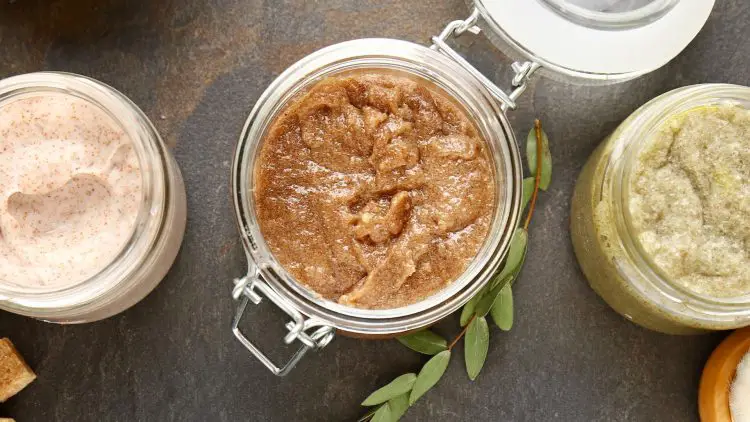
The base recipe serves as a canvas for endless possibilities. Understanding how different ingredients interact allows you to create specialized formulations:
Seasonal Adaptations:
- Summer: Add cucumber powder for cooling properties
- Winter: Incorporate shea butter for extra moisture
- Spring: Include dried flower petals for aromatherapy
- Fall: Add pumpkin seed oil for intensive nourishment
Specific Skin Concerns:
- Hyperpigmentation: Include licorice root powder
- Dullness: Add pearl powder for subtle luminosity
- Aging concerns: Incorporate CoQ10 and peptide powders
- Uneven texture: Mix in finely ground rice powder
Aromatherapy Combinations:
- Energizing: Blend of citrus and peppermint
- Relaxing: Lavender, chamomile, and vanilla
- Grounding: Sandalwood, patchouli, and cedar
- Uplifting: Bergamot, ylang-ylang, and jasmine
Application Methods: Maximizing Benefits
The effectiveness of your sugar scrub depends significantly on proper application:
- Pre-Treatment:
- Cleanse skin thoroughly
- Open pores with warm water or steam
- Pat skin until slightly damp but not wet
- Application Process:
- Scoop a generous amount with clean, dry hands
- Apply to skin using circular motions
- Focus on rough areas but maintain gentle pressure
- Avoid broken skin or active breakouts
- Leave on for 1-2 minutes to allow oils to penetrate
- Removal:
- Rinse with warm water
- Pat skin dry gently
- Follow with moisturizer if needed
Storage and Shelf Life
Without commercial preservatives, proper storage is super important!
- Keep in an airtight glass container
- Store in a cool, dry place away from direct sunlight
- Use clean, dry hands or a spoon to scoop product
- Watch for changes in color, smell, or texture
- Use within 2-3 months
- If water enters the container, discard and make a fresh batch
Frequency of Use
Commercial scrubs often recommend daily use – good news that this concentrated formula requires less frequent application:
- Normal skin: 1-2 times per week
- Sensitive skin: Once every 1-2 weeks
- Rough areas (feet, elbows): 2-3 times per week
- Face: Once every 1-2 weeks, using gentler pressure
Precautions and Considerations
Natural ingredients generally pose lower risks than synthetic alternatives, but there might still be some effects on your skin, so I suggest you:
- Perform a patch test before full application
- Avoid using on broken skin or active inflammation
- Be cautious with essential oils if pregnant or nursing
- Adjust oil ratios based on skin type and climate
- Use caution in the shower as oils can make surfaces slippery
- Consider potential allergies to any ingredients
Transform Your Skincare Routine with Kitchen Ingredients
This DIY sugar scrub recipe provides a foundation for endless customization, allowing you to adapt the formulation as your skin’s needs change throughout the seasons and years.
The satisfaction of creating an effective skincare product from simple, natural ingredients extends beyond the immediate benefits to your skin. It connects you to a tradition of self-sufficient skincare while providing the flexibility to adjust and perfect your formula over time.
Skincare is highly individual—what works perfectly for one person may need adjustment for another. Don’t hesitate to modify the ratios and ingredients to suit your specific needs, always keeping in mind the basic principles of safe preservation and proper application.