
Hey Beautiful! This site is reader-supported and we earn commissions if you purchase products from retailers after clicking on a link from our site.
Scroll through any med spa menu right now and you’ll run into the same two words over and over: exosomes and peptides. Both show up in anti-aging serums, both get pushed hard in clinics, and both come with big claims about firmer, smoother, more youthful skin. If you’re trying to figure out where to actually spend your money, that overlap makes the decision more confusing, not less.
The part most articles skip is this: exosomes and peptides aren’t fighting for the same spot in your routine. Peptides are small signaling molecules you apply topically, day after day, as part of a regular skincare habit. Exosomes are cell-derived messengers that mostly get used in a clinic, often paired with microneedling or laser treatments to boost recovery and results. They work at different depths, on different timelines, and for different budgets.
Let’s find out what your skin needs!

What to Know at a Glance
If you only have 30 seconds, here’s the gist:
| Peptides | Exosomes | |
|---|---|---|
| What they are | Short chains of amino acids that signal skin cells | Tiny vesicles released by cells, carrying proteins, lipids, and growth factors |
| How you use them | Mostly topical: serums, creams, at-home routines | Mostly in-clinic: injections, post-procedure serums, microneedling boosters |
| Cost | $20–$150 for over-the-counter products | $300–$1,500+ per clinical session |
| Time to see results | 4–12 weeks of consistent use | Days to a few weeks, often paired with another procedure |
| Regulation | Lightly regulated cosmetic ingredient | Regulatory status still developing; quality varies a lot by source |
| Best for | Daily maintenance, prevention, budget-friendly routines | Faster recovery, post-procedure support, more visible regenerative effects |
Peptides are the steady, lower-cost daily habit.
Exosomes are the higher-intensity, higher-cost clinical add-on.
A lot of people end up using both at different points, not picking one forever.
What Peptides Actually Are
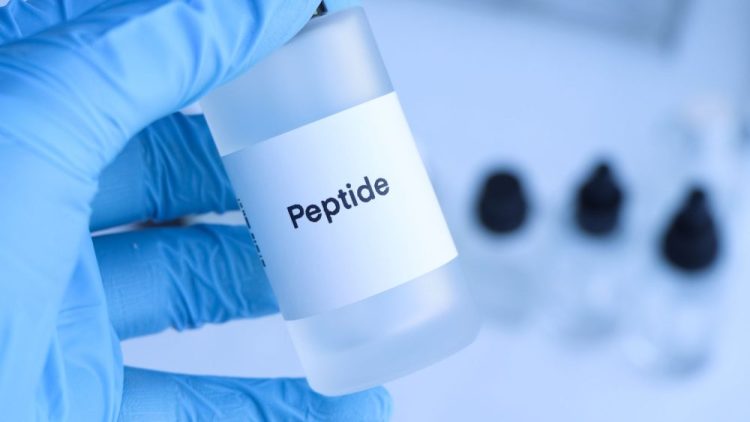
Peptides are short chains of amino acids, basically small fragments of protein. Your skin already makes them naturally, and they act as chemical messages that tell cells what to do telling skin cells to produce more collagen, elastin, and other proteins involved in youthful-looking skin. As you get older, natural peptide activity slows down, which is part of why skin starts to look thinner and less bouncy.
The reason peptides work so well as a topical ingredient comes down to size. Full-sized proteins like collagen are too large to get through the skin’s surface, but peptides are small enough to slip through and signal cells to perform specific functions.
There isn’t just one type. Skincare peptides generally fall into a few categories:
- Signal peptides — tell fibroblasts to ramp up collagen and elastin production
- Carrier peptides — deliver trace minerals like copper to support skin repair
- Enzyme-inhibitor peptides — block the enzymes that break down collagen, so you retain more of what your skin already produced
- Neurotransmitter-inhibitor peptides — relax the tiny muscle contractions that deepen expression lines, similar in concept to how injectables work but far milder
What Exosomes Actually Are
Exosomes are much smaller and more specialized. They’re not cells themselves, they’re packages that cells send to each other.
Easier way to think of them is as tiny courier vesicles that carry a concentrated cargo of proteins, lipids, and growth factors that act as instructions, telling skin cells how to repair damage and renew their structure.
They come from a few different sources, most commonly:
- Plant-derived exosomes (from sources like rose or ginseng) — used mostly in topical serums
- Human-derived exosomes — sourced from stem cells, generally used in clinical settings
- Animal or synthetic exosomes — less common, quality and sourcing vary widely
Once exosomes reach skin cells, they can alter gene expression and cellular function, and they’ve been shown to induce collagen formation, enhance tissue regeneration, and reduce inflammation.
That’s a broader and more direct biological effect than most topical peptides can achieve on their own, which is part of why exosomes are almost always paired with a procedure that creates tiny channels in the skin, like microneedling or laser resurfacing, so they can actually get where they’re going.
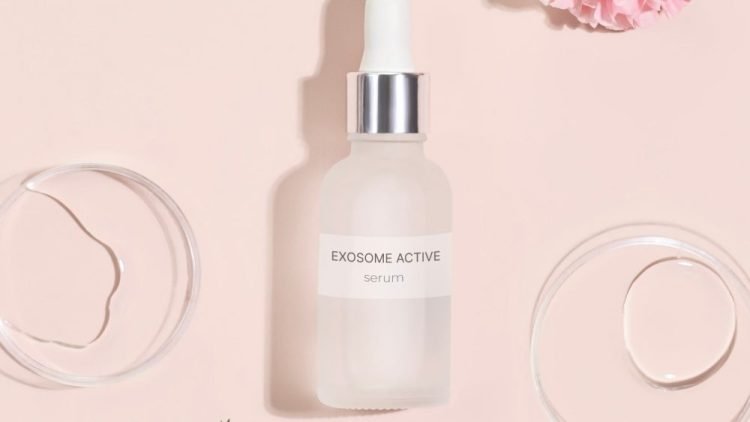
How They Work
PEPTIDES                          EXOSOMES
   |                                  |
Applied topically                Delivered via injection,
   |                              microneedling, or post-
Absorbed through                 procedure serum
outer skin layer                     |
   |                              Penetrate deeper skin
Signal fibroblasts to            layers (often with
produce more collagen            help from a procedure)
and elastin                          |
   |                              Deliver growth factors
Gradual firming,                 and signaling molecules
hydration, and texture           directly to damaged or
improvement over weeks           aging cells
                                      |
                                  Support faster healing,
                                  collagen synthesis, and
                                  inflammation control
Benefits of Exosomes and Peptides Compared
What peptides are good at:
- Supporting ongoing collagen and elastin production
- Strengthening the skin barrier, which helps with hydration and resilience
- Softening the look of fine lines with regular use
- Fitting easily into a daily routine without downtime
- Working well alongside most other actives, aside from strong acids
What exosomes are good at:
- Speeding up recovery after microneedling, laser, or peel treatments
- Calming inflammation and redness post-procedure
- Supporting more noticeable improvements in tone, texture, and firmness when paired with in-office treatments
- Addressing a broader range of concerns, including some early research on wound healing, scarring, and hair thinning
What to Watch For
Neither ingredient is risk-free, and neither is a miracle fix.
Peptides are generally well tolerated. Some people with sensitive skin notice redness or mild irritation, so a patch test before regular use is a smart first step. Peptides can also degrade if you layer them with strong acids like vitamin C or AHAs, so it’s worth spacing those out in your routine or alternating them by day.
Exosomes carry more variables. Because the industry is still young, product quality and sourcing differ a lot from one clinic or brand to another. A dermatology-focused review on exosome skincare noted that the strongest results still come from clinician-administered protocols rather than at-home serums, and cautioned against pairing exosomes with aggressive DIY devices at home. If you’re considering an in-clinic exosome treatment, ask the provider directly where the exosomes are sourced from and what quality testing they’ve undergone before you book anything.
Cost and Time Commitment
This is often the deciding factor for most people.
- Peptide serums and creams typically run $20 to $150, are available without a prescription, and slot into a routine you already have. Visible results usually take 4 to 12 weeks of consistent, twice-daily use.
- Exosome treatments usually run $300 to $1,500 or more per session, depending on the clinic and whether it’s paired with microneedling or another procedure. Results can show up faster, sometimes within days for recovery-related benefits, but the cost adds up if you’re doing a series of sessions.
If budget or convenience matters more than speed, peptides are the more feasible starting point for most people. If you’re already booked for a procedure like microneedling and want to shorten downtime or boost results, adding an exosome step makes more practical sense than trying to replace the procedure with a serum.
So, Which One Should You Actually Use?
It comes down to what you’re trying to solve:
- Daily prevention and maintenance → Peptides. Build them into your morning or night routine and give them a few months to work.
- Recovering faster after a procedure → Exosomes, used as a post-treatment booster under professional guidance.
- Fine lines and early sagging → Start with peptides and see how your skin responds over 8 to 12 weeks before spending more on in-clinic options.
- More advanced texture, scarring, or laxity concerns → A combination approach, typically peptides for daily upkeep and exosomes as an in-clinic add-on a few times a year.
- Limited budget → Peptides, since over-the-counter options are widely available and don’t require a clinic visit.
A realistic routine for most people looks like this: use a peptide serum daily as part of your regular skincare, and if you get periodic in-office treatments like microneedling or laser resurfacing, ask your provider about adding an exosome serum during recovery to support healing and results.
That combination lets each ingredient do the job it’s actually suited for instead of asking one product to cover everything.
FAQs
Yes, and many clinics recommend it. Peptides work well as a daily topical, while exosomes are typically reserved for periodic in-clinic treatments. Using both isn’t redundant since they target skin at different depths and through different delivery methods.
Human-derived exosomes used in reputable clinics have generally shown good tolerability, especially post-procedure. That said, the field is still developing, sourcing and quality vary, and there isn’t the same long track record that topical peptides have. Ask your provider about sourcing and safety testing before starting treatment.
Most people notice hydration and texture improvements within a few weeks, with more visible firmness and fine-line changes appearing between 4 and 12 weeks of consistent use. Results build gradually rather than overnight.
No. Exosomes support skin recovery, collagen production, and overall tissue health, but they don’t relax muscles or add volume the way neuromodulators and fillers do. They’re a regenerative support tool, not a direct replacement.
Exosomes have more early research behind them for scarring and wound healing, particularly when paired with microneedling. Peptides can help with overall skin texture and barrier support but are unlikely to make a major dent in established scarring on their own.
No. Peptides used in over-the-counter skincare are treated as cosmetic ingredients, so oversight is lighter than it is for prescription drugs. That doesn’t mean they’re ineffective, but it does mean product quality and formulation stability vary between brands.
Not always. What matters more than price is the specific peptide used, its concentration, and how stable the formulation is. A well-formulated mid-range product with a researched peptide like Matrixyl often outperforms an expensive product with vague “peptide complex” labeling.
Sources
- Peptides for Anti-Aging: How They Work & Which to Use in 2026 — Colorescience
- Peptides and Collagen: How They Work Together — NassifMD Skincare
- Do Peptides Work? A Dermatologist’s Guide — Doctor Rogers Skin Care
- Peptides: Emerging Candidates for Prevention and Treatment of Skin Senescence — NCBI/PMC
- The Rise of Exosome-Based Cosmeceuticals — BioInformant
- Exosome Therapy Facial Benefits — Skin Spa New York
- Exosomes in Skincare: The Regenerative Trend That’s Changing 2026
This article is for general information only and isn’t a substitute for advice from a licensed dermatologist or medical provider, especially before starting any injectable or in-clinic treatment.