
Hey Beautiful! This site is reader-supported and we earn commissions if you purchase products from retailers after clicking on a link from our site.
Walk down any skincare aisle and collagen is on half the labels. Creams, serums, sheet masks, powders you stir into coffee. The word gets slapped onto everything, and somewhere between the marketing copy and the actual biology, a lot of confusion crept in.
So let’s sort out what’s true, what’s exaggerated, and what to actually do about it if you want firmer, healthier-looking skin.
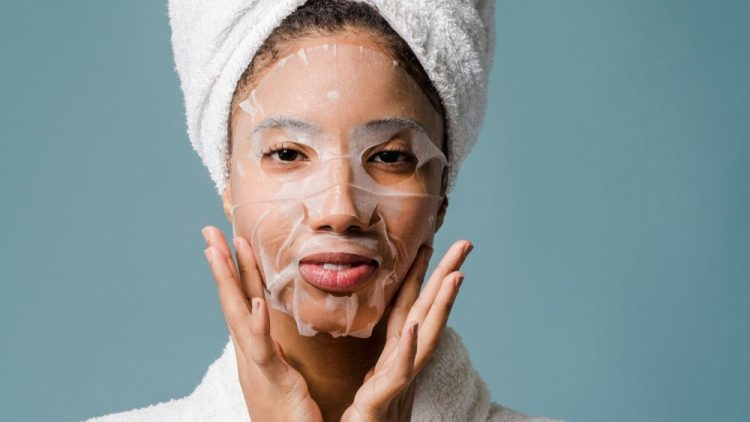
Myth vs Fact At A Glance
| Claim | Myth or Fact | Short Answer |
|---|---|---|
| Collagen creams rebuild your skin’s collagen | Myth | Whole collagen molecules are too large to pass through the skin barrier |
| Oral collagen supplements do nothing | Myth | Multiple randomized trials show measurable gains in hydration, elasticity, and wrinkle depth |
| More product means faster results | Myth | Overuse can irritate skin and disrupt the barrier, working against you |
| All collagen skincare is the same | Myth | Molecular weight and formulation change how (or if) it works |
| You need animal-derived collagen for results | Myth | Peptides that boost your own collagen production don’t have to come from animals |
| Collagen creams can still hydrate and plump skin | Fact | Even unabsorbed collagen holds moisture on the surface, which softens fine lines temporarily |
| Sun damage breaks down collagen faster than age alone | Fact | UV exposure is one of the biggest drivers of collagen loss, arguably bigger than age itself |
What Collagen Is Actually Doing In Your Skin
Collagen is a structural protein, and it’s the main one holding your skin together. It makes up roughly 75-80% of your skin’s dry weight, forming the scaffolding underneath the surface that keeps things firm and bouncy. As you age, that production slows down, the existing collagen breaks apart into fragments, and the result is the sagging, thinning, and wrinkling most people are trying to fight off.
The confusion starts when brands imply that rubbing collagen onto your face replaces what your body stops making on its own. That’s where things get murky, so let’s go myth by myth.
Myth: Collagen Creams Rebuild Your Skin From The Outside
This is the big one, and it’s rooted in a real number: the 500-dalton rule. Skincare researchers generally agree that a molecule needs to weigh under about 500 daltons to slip through the stratum corneum, which is the outermost layer of skin acting as your barrier against, well, everything.
Standard collagen clocks in around 300,000 daltons. That’s not a small gap. Trying to push that molecule through your skin is closer to trying to fit a beach ball through a keyhole. Even hydrolyzed collagen, which is broken into smaller peptide chains for easier use in formulas, usually still lands well above that 500-dalton threshold.
So what does a collagen cream actually do? Mostly, it sits on the surface and holds water there, which genuinely does plump the skin and soften the look of fine lines while it’s on your face. That’s a real, if temporary, benefit. It’s just not “rebuilding” anything underneath.
A newer wave of ultra-low molecular weight collagen peptides (some brands cite weights as low as 200-250 daltons) are formulated specifically to clear that bar. Early manufacturer-backed data looks promising, but independent, peer-reviewed research on these specific ultra-small peptides is still catching up. Worth watching, not worth betting your whole routine on yet.
Myth: Oral Collagen Supplements Are Just Expensive Hype
This one gets repeated a lot, and it’s actually the opposite of what the current research shows. Because swallowing collagen skips the skin-barrier problem entirely, digestion and absorption work very differently than topical application.
A 2025 meta-analysis in The American Journal of Medicine pooled 23 randomized controlled trials covering nearly 1,500 participants and found that collagen supplements produced measurable improvements in skin hydration, elasticity, and wrinkle depth. A separate 2024 double-blind, placebo-controlled trial tracked participants using confocal microscopy and ultrasound, and found a 44.6% drop in collagen fragmentation after 12 weeks of daily supplementation, compared to placebo.
A few honest caveats worth knowing before you buy a tub:
- Timeline matters. Most studies show noticeable change starting around 8-12 weeks, not days.
- Dose matters. Effective trials generally used somewhere between 2.5g and 10g of hydrolyzed collagen per day.
- Source matters less than you’d think. Research comparing marine versus bovine or porcine collagen found no meaningful difference in effectiveness.
- Funding bias is real. Some of the strongest results come from industry-funded studies, so it’s fair to weigh outcomes with a bit of skepticism and lean on independent meta-analyses when you can.
Bottom line: oral collagen isn’t magic, but it’s also not snake oil. The evidence leans genuinely positive.
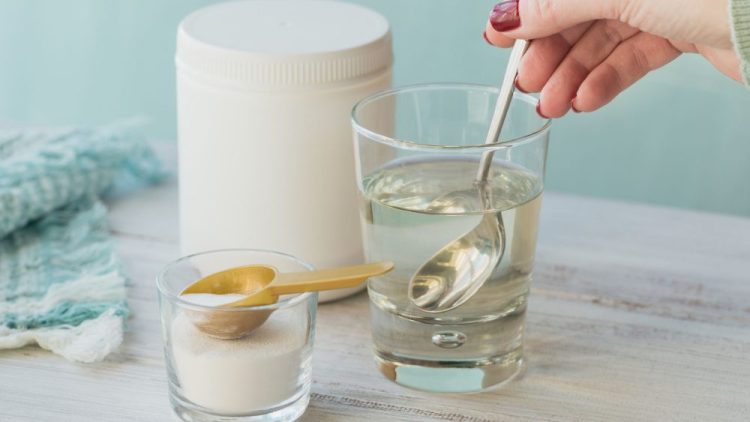
Myth: Piling On More Collagen Products Speeds Up Results
Layering five collagen-labeled products doesn’t multiply the benefit. Your skin barrier can only hold so much, and overloading it with heavy, occlusive formulas often backfires, causing clogged pores, irritation, or a compromised barrier that actually accelerates moisture loss.
A simpler approach works better:
- One well-formulated collagen or peptide serum
- A moisturizer to seal it in
- Sunscreen every single morning, since UV exposure is one of the fastest ways to break down existing collagen
- Retinoid or retinol a few nights a week, since this is one of the few topical ingredients with strong evidence for boosting your skin’s own collagen production
That’s a routine your skin can actually keep up with, and it does more than a shelf full of overlapping collagen products.
Myth: All Collagen Skincare Works The Same Way
Not even close. “Collagen” on a label can mean wildly different things depending on the molecular weight, the delivery system, and whether the product is even trying to penetrate skin at all. A basic drugstore collagen cream built for surface hydration is a completely different product than a peptide serum engineered to signal your fibroblasts to produce more collagen on their own.
Peptides like Matrixyl (palmitoyl pentapeptide) or copper peptides work through a different mechanism entirely. They’re small enough to get where they need to go and they send a chemical signal that tells skin cells to ramp up collagen production, rather than trying to deliver collagen itself.
If your goal is genuine long-term firmness, peptide-driven products with published clinical backing usually outperform a plain “contains collagen” label.
Myth: You Need Animal-Derived Collagen To See Results
Vegan and cruelty-free skincare brands lean on this misunderstanding a lot, but there’s a workaround that’s actually backed by science. Plant-based “collagen boosters” don’t contain collagen at all. Instead, they use ingredients like vitamin C, peptides, and antioxidants to stimulate your skin’s own fibroblasts to produce more collagen naturally.
Vitamin C in particular is a cofactor your body needs for collagen synthesis to happen at all, so a stable, well-formulated vitamin C serum can genuinely support collagen production without any animal-derived ingredients involved.
So What Actually Moves The Needle?
Here’s a practical, doable rundown, ranked by how much evidence backs each one:
- Daily sunscreen. UV damage is consistently named as one of the fastest ways to degrade existing collagen. This single habit protects more collagen than any serum destroys or rebuilds.
- Retinoids. Prescription tretinoin and over-the-counter retinol both have decades of research behind them for stimulating collagen production and improving fine lines over time.
- Vitamin C serum. Supports the collagen synthesis pathway and adds antioxidant protection against the free radicals that break collagen down.
- Peptide serums. Signal fibroblasts to produce more collagen, generally with fewer irritation issues than retinoids.
- Oral hydrolyzed collagen. Backed by a growing pile of randomized trials for hydration, elasticity, and wrinkle depth, provided you give it the full 8-12 weeks.
- Sleep and protein intake. Your body repairs collagen overnight, and adequate dietary protein gives it the raw materials to do that repair work.
- Topical collagen creams. Fine as a hydrating, plumping layer in your routine, just don’t expect it to rebuild anything underneath the surface.
A Simple Routine You Can Actually Stick To
| Time | Step | Why |
|---|---|---|
| Morning | Vitamin C serum | Supports collagen synthesis, adds antioxidant defense |
| Morning | Moisturizer | Locks in hydration |
| Morning | Sunscreen (SPF 30+) | Prevents UV-driven collagen breakdown |
| Evening | Retinol or retinoid (2-4x/week) | Stimulates collagen production over time |
| Evening | Peptide serum (on off-nights) | Additional signal for collagen synthesis without irritation |
| Daily | Oral collagen supplement (optional) | Supports hydration and elasticity from the inside, over 8-12 weeks |
Frequently Asked Questions
Yes, just not what most labels imply. It hydrates and temporarily plumps the surface. It doesn’t rebuild deeper collagen structures.
Most clinical trials measure results starting around 6-8 weeks, with the strongest changes showing up by 12 weeks of consistent daily use.
Research hasn’t found a meaningful difference in effectiveness between sources. Pick based on dietary preference or allergies rather than assumed superiority.
Yes. Sunscreen, retinoids, and vitamin C all support your skin’s own collagen production without a single collagen-labeled product involved.
Generally well-tolerated in clinical trials, with no significant side effects reported. As always, check with a doctor if you’re pregnant, nursing, or managing a medical condition.