Hey Beautiful! This site is reader-supported and we earn commissions if you purchase products from retailers after clicking on a link from our site.
Your skin barrier is the thin outer layer standing between you and, well, everything. Pollution, weather swings, harsh actives, over-washing, stress. When it’s working right, you don’t think about it at all. When it’s not, your skin lets you know pretty loudly.
The tricky part is that a lot of barrier damage gets misread as “bad skin” or a new allergy, so people pile on more products trying to fix it, which usually makes things worse.
Quick Self-Check
Not sure if this is actually you? Run through this list. If you’re nodding along to three or more, your barrier probably needs some attention.
- Skin stings when you apply products that never used to bother you
- You’ve noticed more redness or flushing than usual
- Skin feels tight or flaky no matter how much moisturizer you use
- You’re breaking out in spots that used to be clear
- Your face is oily in some areas and dry in others at the same time
- Actives you used to rely on aren’t working, or are causing irritation
- Cuts, bites, or blemishes are taking longer to heal than normal
What the Skin Barrier Actually Does
Your skin barrier (also called the stratum corneum) is like a brick wall. The “bricks” are skin cells, and the “mortar” holding them together is a mix of ceramides, fatty acids, and cholesterol.
This wall does two jobs at once: it keeps water in and keeps irritants, bacteria, and allergens out.
When that mortar breaks down, water escapes faster than it should and outside irritants get in easier. That imbalance is what causes most of the symptoms on this list.
| Healthy Barrier | Damaged Barrier |
|---|---|
| Skin feels comfortable, not tight | Skin feels tight, rough, or raw |
| Even tone, minimal redness | Blotchy, red, or flushed patches |
| Products absorb without stinging | Almost everything stings or burns |
| Skin bounces back from weather changes | Skin reacts to every little change |
| Consistent oil production | Oily in some spots, dry and flaky in others |
1. Your Skin Stings or Burns With Almost Everything
If your regular moisturizer or a gentle cleanser you’ve used for months suddenly starts to sting, that’s a red flag. A compromised barrier can’t keep irritants at the surface where they belong, so ingredients that were once totally fine start reaching deeper into the skin and triggering a reaction.
This is one of the clearest signs because it happens fast and it happens with products you already know are mild.
2. Redness, Flushing, or Blotchy Patches
A weakened barrier struggles to regulate inflammation. Blood vessels sit closer to the surface, and irritants trigger a reaction more easily, so you get redness that shows up out of nowhere or lingers longer than it should after minor irritation like sun exposure or a new product.
If you’re noticing more redness than usual, especially on the cheeks, nose, or around the mouth, it’s worth checking whether your routine has gotten too aggressive lately.
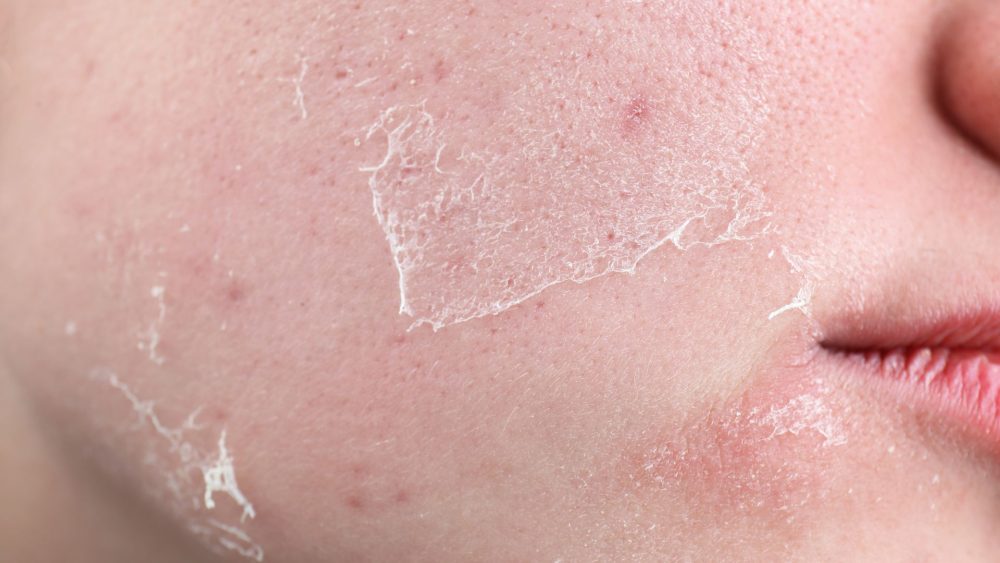
3. Skin Feels Tight, Rough, or Flaky
This is the classic sign, but it gets misread constantly. People assume flaky, tight skin means “dry skin” and reach for a heavier moisturizer, but that only treats the surface. The real issue is that the barrier can’t hold moisture in anymore, so water evaporates through the skin faster than normal (this is called transepidermal water loss, or TEWL).
You can pile on cream after cream and still feel tight by midday if the barrier itself isn’t repaired first.
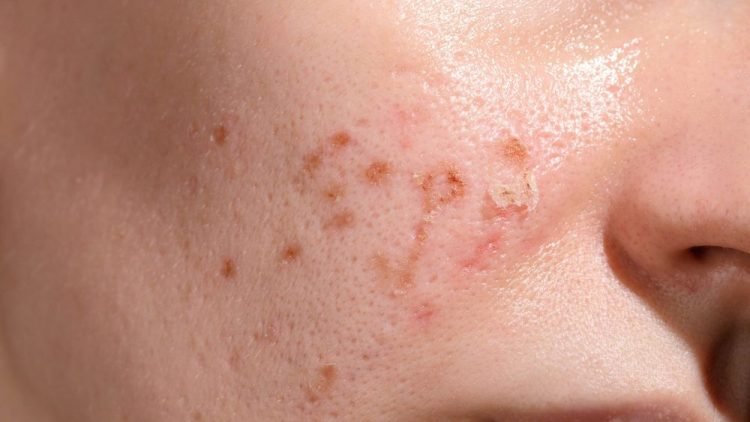
4. Breakouts Show Up in New, Unfamiliar Spots
Barrier damage and acne aren’t the same thing, but they’re closely linked. A weak barrier lets bacteria and debris slip past more easily, and it also throws off your skin’s natural oil production. That combo often shows up as small breakouts along the jaw, cheeks, or forehead, areas that weren’t a problem before.
If you’re breaking out in a totally new pattern with no clear cause (new detergent, new pillowcase, hormonal shift), a struggling barrier is worth ruling out.
5. Your Skin Feels Oily and Dry at the Same Time
This one confuses people the most. How can skin be oily and dehydrated at once? Easy: when the barrier is compromised, skin loses water through evaporation (dehydration) while oil glands often ramp up production to compensate for the dryness. You end up with a shiny T-zone and flaky, tight cheeks on the same face, sometimes even in the same hour.
If your skin type suddenly feels like it changed overnight, this is usually why.
6. Products That Used to Work Now Do Nothing (or Make Things Worse)
A healthy barrier absorbs and uses active ingredients the way they’re meant to be used. A damaged one either blocks them out entirely or lets them in too fast and too deep, which causes irritation instead of results. So you might notice your retinol isn’t doing anything anymore, or your vitamin C suddenly leaves your face blotchy.
This is your skin’s way of saying it needs a break from actives, not a stronger version of the same product.
7. Skin Takes Longer to Heal or Calm Down
Small cuts, bug bites, breakouts, sunburn. Normally these calm down in a few days. With a damaged barrier, healing slows down noticeably because the skin’s repair processes are already busy trying to patch the barrier itself. If everything on your face seems to take twice as long to fade or heal, that’s a sign your skin is working overtime just to keep itself intact.
How to Actually Repair a Damaged Skin Barrier
Fixing this isn’t about buying more products. It’s mostly about doing less, and doing it consistently. Here’s a realistic order of operations.
1. Pause Actives for 1-2 Weeks
Retinoids, exfoliating acids (AHAs/BHAs), and vitamin C are the most common culprits behind barrier damage when overused. Give your skin a real break from all of them, not just a “lighter” version, while it recovers.
2. Simplify Your Routine to the Basics
Cut your routine down to a gentle cleanser, a barrier-repair moisturizer, and sunscreen during the day. That’s it. Adding more steps right now just adds more chances for irritation.
3. Look for Barrier-Repairing Ingredients
Ceramides, cholesterol, fatty acids, niacinamide, and squalane help rebuild the “mortar” between skin cells. Petrolatum-based occlusives (yes, plain Vaseline works) are also genuinely useful here because they seal moisture in while the barrier heals.
4. Switch to a Gentle, Low-pH Cleanser
Harsh, foaming cleansers strip the skin’s natural oils and disrupt its pH, which slows down repair. A gentle, low-pH, non-foaming cleanser does the job without adding to the damage.
5. Skip Hot Showers and Hot Water on Your Face
Hot water feels great but breaks down the lipids in your barrier faster than lukewarm water. Turning the temperature down is a small change that makes a real difference over a couple of weeks.
6. Give It Time
Barrier repair usually takes anywhere from 2 to 6 weeks depending on how damaged it is. Consistency matters more than intensity here, so resist the urge to add something new every few days to speed things up.
Timeline: What to Expect During Recovery
| Week | What’s Happening |
|---|---|
| Week 1 | Stinging and redness should start to calm down |
| Week 2-3 | Flakiness and tightness begin to ease |
| Week 3-4 | Oil production starts to balance out |
| Week 4-6 | Skin can start tolerating actives again, introduced one at a time |
When to See a Dermatologist
Most barrier damage responds well to a simplified routine, but check in with a dermatologist if:
- Symptoms don’t improve after 4-6 weeks of a gentle routine
- Redness is severe, painful, or spreading
- You suspect an actual allergic reaction rather than general irritation
- Skin is cracking, oozing, or showing signs of infection
A damaged barrier is annoying, but it’s also one of the most fixable skin issues out there. The fastest way through it is almost always doing less, not more, and letting your skin’s own repair system catch up.
FAQs
Most people see noticeable improvement in 2 to 4 weeks with a simplified routine, and full recovery usually falls somewhere between 4 and 6 weeks. Severe damage from prolonged over-exfoliation or steroid use can take longer, so don’t panic if week 2 doesn’t look dramatically different.
Yes, in most cases. Skin is designed to repair itself. The main thing you need to do is stop actively damaging it (harsh actives, hot water, over-cleansing) and give it the basic ingredients it needs to rebuild, like ceramides and fatty acids.
Avoid retinoids, AHAs/BHAs, vitamin C, physical scrubs, alcohol-based toners, and any fragranced products. Also skip DIY treatments like lemon juice or baking soda, which are far too harsh for compromised skin.
Not really a risk. Layering a gentle, ceramide-rich moisturizer (and an occlusive like petrolatum on top at night) is one of the most helpful things you can do. What you want to avoid is layering multiple active ingredients on top of that moisturizer.
Hydration supports overall skin health, but it won’t repair a damaged barrier on its own. The barrier’s job is to prevent water loss through the skin’s surface, so the fix has to happen topically, with barrier-repairing ingredients, not just from the inside.
It can, especially long-wear or matte formulas with alcohol or heavy fragrance. While your barrier is healing, stick to minimal, fragrance-free makeup or skip it on the days you can.
Naturally sensitive skin reacts to certain triggers consistently over time. A damaged barrier is usually a sudden shift, meaning products and situations that never used to bother you are suddenly causing reactions. If your skin’s tolerance clearly dropped in a short window, it’s more likely barrier damage than baseline sensitivity.