Hey Beautiful! This site is reader-supported and we earn commissions if you purchase products from retailers after clicking on a link from our site.
Tranexamic acid started out as a hospital drug that helps stop heavy bleeding. Then doctors noticed something nobody expected: patients taking it saw their melasma fade. A few decades later, the same molecule is showing up in serums that promise to lighten stubborn dark spots.
So does tranexamic acid (TXA) live up to the hype? For several types of discoloration, the research says yes, with a few caveats worth knowing.

What is tranexamic acid, and how does it fade dark spots?
Tranexamic acid is a lab-made version of the amino acid lysine. As an anti-fibrinolytic drug, it blocks plasmin, the enzyme that breaks down blood clots. That same plasmin-blocking trick is what makes it useful for your skin.
When sun, heat, hormones or inflammation stress your skin, the surface cells (keratinocytes) send chemical messages to your pigment cells (melanocytes). Plasmin helps fuel that chatter, and the result is extra melanin parked right where you don’t want it.
Here’s the interesting part: TXA doesn’t attack your pigment cells head-on. A lab study on cultured human melanocytes found it only slowed melanin production when skin-cell signals were present. In other words, it quiets the messengers instead of the factory.
What TXA does in your skin, in short:
- Blocks plasmin, so fewer pigment-triggering signals (such as prostaglandins and melanocyte-stimulating hormone) reach your melanocytes
- Lowers tyrosinase activity, the enzyme that builds melanin
- Calms inflammation and mast cells, which pile up in melasma patches
- Reduces extra blood vessels that feed melasma, according to a review of oral TXA for melasma
- Curbs hormone-driven pigment: a 2025 study on estrogen-triggered melanin found TXA blocked pigment production sparked by estradiol
That last point explains why TXA has such a strong reputation for melasma, which is so often tied to pregnancy and birth control.
Which dark spots does tranexamic acid work on?
TXA shines on pigment that’s driven by inflammation, hormones or sun. It does far less for spots caused by years of built-up sun damage or genetics. Here’s how the common types line up:
| Type of dark spot | What usually causes it | How well TXA works |
|---|---|---|
| Melasma | Hormones, sun, heat, genetics | Strongest evidence of any spot type, for both pills and serums |
| Post-inflammatory hyperpigmentation (PIH) | Acne, eczema, bug bites, lasers, peels | Good. A study on laser-induced pigment found TXA cut melanin and tyrosinase activity |
| Sun-induced spots and uneven tan | Recent UV exposure | Good for topical use, per a review of topical TXA for sun-induced pigment |
| Age spots (solar lentigines) | Years of accumulated sun damage | Limited. They form through a different process than melasma |
| Freckles | Genetics plus sun | Minimal. Sunscreen does more here |
If you’re not sure what you’re dealing with, a dermatologist can tell. The American Academy of Dermatology notes that melasma can mimic other conditions, and a quick look under a special lamp shows how deep the pigment sits.
What does the research say about tranexamic acid for dark spots?
The short answer: TXA consistently lightens melasma, and it tends to cause less irritation than hydroquinone. Most studies focus on melasma, so that’s where the data is richest.
The big picture. A 2017 meta-analysis of tranexamic acid in melasma pooled 11 studies and 667 people. Melasma severity scores dropped meaningfully with TXA alone, and adding TXA to standard treatment lowered scores even further. Side effects were mostly mild stomach upset and short-lived skin irritation.
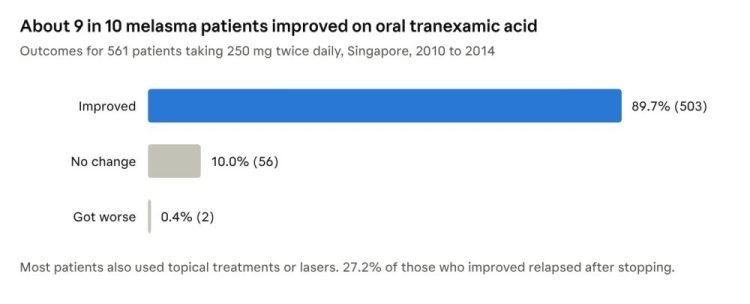
The largest real-world study. Doctors in Singapore reviewed 561 patients who took oral TXA for melasma. Most saw lightening within two months:
Topical TXA vs hydroquinone. Several head-to-head trials show serums and creams holding their own against the long-time favorite:
- In a randomized trial of 60 women, 5% topical TXA lowered melasma scores about as well as 2% hydroquinone, with fewer side effects and happier patients.
- A split-face trial of liposomal TXA vs 4% hydroquinone found three people got irritated on the hydroquinone side and nobody did on the TXA side.
- A split-face study of 3% TXA vs hydroquinone plus dexamethasone found similar satisfaction, with noticeably more side effects from the hydroquinone combo.
- In a 290-patient comparison of TXA injections vs 4% hydroquinone, 44% of the TXA group cleared fully compared with 32% on hydroquinone.
Over-the-counter blends. A vehicle-controlled trial of 2% TXA plus 2% niacinamide reduced facial hyperpigmentation compared with a plain moisturizer. That’s good news if you’re shopping drugstore serums.
Topical, oral or in-office: which form of TXA is right for you?
You can put TXA on your skin, swallow it as a pill, or have a dermatologist inject or microneedle it in. Pills have the strongest track record, while serums are the easiest place to start.
| Topical serum or cream | Oral tablets | Injections or microneedling | |
|---|---|---|---|
| Typical strength | 2% to 5% | 250 mg twice a day | About 4 mg/mL, every 4 weeks |
| Prescription needed? | No | Yes | Done in a clinic |
| Strength of results | Mild to moderate | Strongest evidence | Strong |
| Main downsides | Occasional dryness or redness | Stomach upset, headache, rare blood clots | Cost, needle discomfort |
| Best for | Mild spots, PIH, upkeep after other treatments | Stubborn melasma that hasn’t budged | Melasma when pills aren’t an option |
A few things to know about each:
- Topical TXA is gentle and widely available. Concentrations between 2% and 5% have shown results without serious side effects. Dermatologist Amit Pandya told an AAD meeting he doesn’t think topical TXA is as effective as the oral form, so set your expectations accordingly.
- Oral TXA is approved by the FDA for heavy menstrual bleeding, and using it for melasma is off-label. Your doctor will weigh your clotting risk first. The AAD says when it’s prescribed for melasma, it’s usually a pill taken twice daily.
- Injected or microneedled TXA delivers the drug right into the patch. Studies have used intradermal microinjections of 4 mg/mL every four weeks.
Tranexamic acid vs hydroquinone, vitamin C and other brighteners
TXA works upstream, on the signals that tell skin to make pigment. Most other brighteners work further down the line, on melanin production or delivery. That’s why TXA pairs so nicely with them.
| Ingredient | How it fades spots | Where it shines | Watch out for | Pairs with TXA? |
|---|---|---|---|---|
| Tranexamic acid | Blocks the plasmin signals that switch on pigment | Melasma, PIH, sensitive skin | Slower on old sun spots | Stacks with everything below |
| Hydroquinone | Directly blocks tyrosinase | Fast, strong fading | Irritation; no longer sold over the counter in the US | Yes, under a dermatologist’s care |
| Vitamin C | Antioxidant that slows melanin production | Sun-damage spots, dullness | Can oxidize and lose strength | Yes |
| Niacinamide | Slows pigment transfer to surface skin cells | Redness, oiliness, overall tone | Rare flushing | Yes, a well-studied combo |
| Azelaic acid | Slows tyrosinase and calms inflammation | Acne marks, rosacea-prone skin | Tingling at first | Yes |
| Retinoids | Speed up skin cell turnover | Sun spots, texture, fine lines | Dryness, sun sensitivity | Yes, ideally at night |
| Kojic acid | Slows tyrosinase | Uneven tone | Can irritate sensitive skin | Yes, often blended in serums |
The combo route has real support. A 12-week study of a serum with 3% TXA, 1% kojic acid and 5% niacinamide saw improvement in melasma, PIH and overall tone starting at week 2. A 2024 study of TXA with niacinamide and vitamin C also found the trio effective and well tolerated.
How to use tranexamic acid in your skincare routine
Good news: TXA is one of the easier actives to work in. It’s gentle, plays well with others, and most trials used it twice a day.
Pick your product. Look for a serum or cream with 2% to 5% tranexamic acid. Formulas that add niacinamide, kojic acid or licorice give you extra fading power in one step.
Patch test first. Dab a little behind your ear or on your jaw for two or three days. No redness or itching? You’re good to go.
Morning routine
- Gentle cleanser
- Tranexamic acid serum
- Vitamin C serum (optional, for extra brightening and antioxidant backup)
- Moisturizer
- Broad-spectrum sunscreen, SPF 30 or higher
Evening routine
- Cleanser
- Tranexamic acid serum
- Retinoid or azelaic acid (optional, start a few nights a week)
- Moisturizer
Make sunscreen non-negotiable. Every bit of progress can vanish after a sunny weekend. The AAD recommends sunscreens with zinc oxide, titanium dioxide or iron oxide for melasma. Tinted formulas with iron oxide also block visible light, which can darken melasma too.
Smart pairing tips:
- Introduce one new active at a time, about two weeks apart, so you know what’s working (or what’s irritating)
- Save retinoids and exfoliating acids for nighttime
- Skip harsh scrubs, which cause inflammation and can trigger more pigment
- Stay consistent. Skipping days slows results more than a weaker formula would
Tranexamic acid side effects and who should be careful
Topical TXA is about as low-drama as brighteners get. Pills are a different story and need a doctor’s input.
Topical side effects (usually mild and short-lived):
- Slight redness or stinging
- Dryness or flaking
- Rare allergic reactions
Oral side effects: Clinical trials report mild stomach upset, headache and muscle aches as the most common issues. In the 561-patient study, 7.1% had side effects, mostly temporary, and one person developed a blood clot in the leg.
Because TXA helps blood clot, oral TXA isn’t for everyone. Talk to your doctor before trying it if you:
- Have had a blood clot, stroke or heart attack
- Have a clotting disorder, or one runs in your family
- Take estrogen birth control or hormone therapy
- Smoke
- Are pregnant, trying to conceive or breastfeeding
- Have kidney disease
Topical TXA doesn’t carry the same clotting concerns, but it’s still smart to check with your doctor during pregnancy.
How long does tranexamic acid take to work?
Plan on 8 to 12 weeks before you judge it. Skin renews its surface layer roughly once a month, so pigment needs a couple of cycles to lift.
| Timeframe | What you might notice |
|---|---|
| Weeks 1 to 2 | Not much yet. Some people see a slightly brighter, more even tone |
| Weeks 2 to 4 | Early fading. In one serum study, improvement started showing at week 2 |
| Weeks 6 to 8 | Visible lightening of melasma and PIH. Oral TXA users typically see a response within about 2 months |
| Week 12 | The point most clinical trials measure results. Time to check in honestly |
| After 3 months | Keep going for maintenance, or talk to a dermatologist about adding a stronger option |
One heads-up: melasma loves to come back. More than a quarter of oral TXA patients relapsed after stopping, which is why dermatologists often recommend never fully stopping melasma treatment once spots clear. A TXA serum plus daily sunscreen makes an easy long-term upkeep plan.
FAQs
It can fade them a lot, but it doesn’t make them sun-proof. Melasma in particular tends to return with sun, heat or hormone shifts. Ongoing sunscreen and a maintenance serum help keep results.
In several trials, topical TXA lightened melasma about as well as hydroquinone with fewer side effects. Hydroquinone still works faster for some people. Many dermatologists use both together for tough cases.
They do different jobs. TXA calms the signals behind pigment, while vitamin C is an antioxidant that also slows melanin production. Using both, TXA plus vitamin C in the morning, covers more ground than either alone.
Yes. Use TXA morning and night, and add retinol at night. Start retinol slowly to avoid irritation, since irritated skin can produce more pigment.
Absolutely. They’re one of the best-studied brightening pairs, and many serums already combine them.
Yes. Much of the research comes from patients with medium to deep skin, and TXA’s low irritation is a big plus, since irritation can trigger new dark spots. A 2024 JAAD review of melasma care in skin of color covers topical options in more detail.
It helps the flat brown or reddish marks left after a breakout (PIH). It won’t fill in pitted or indented scars, which need treatments such as microneedling or lasers.
Both work. Most studies used it twice daily, so morning and night gives you the best shot at results.
Oral TXA should only be used if your doctor approves it. For topical products, check with your OB or dermatologist before starting, especially since pregnancy-related melasma often fades on its own after delivery.