Hey Beautiful! This site is reader-supported and we earn commissions if you purchase products from retailers after clicking on a link from our site.
If your cheeks turn pink after a hot coffee, a windy walk, or a new face cream, you already know rosacea has strong opinions. The good news? A smart skincare routine can quiet a lot of that noise.
Rosacea is a chronic skin condition that affects at least 14 million adults in the U.S., and it usually starts as a tendency to blush or flush more easily than other people. Skincare can’t cure it, but the right habits can make your skin feel more comfortable, cut down on flare-ups, and help your treatment work better, according to dermatologist-recommended rosacea skin care tips.
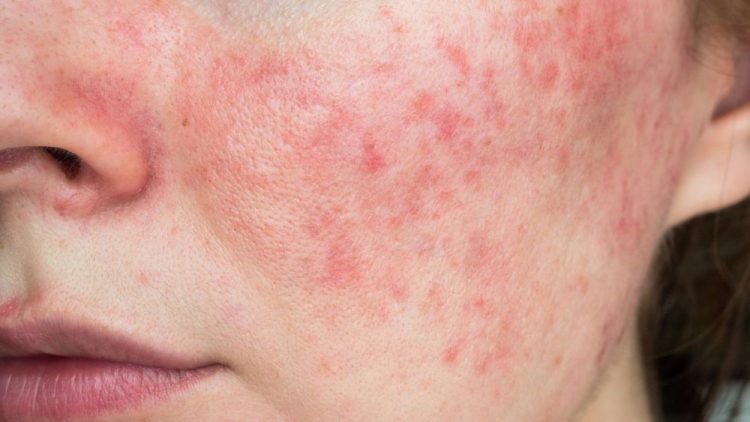
What Rosacea Looks and Feels Like
Rosacea skin is reactive skin. The protective outer layer tends to be weaker, so products and weather that other people shrug off can leave you red, hot, or stinging.
Common signs include:
- Flushing that comes on fast and hangs around
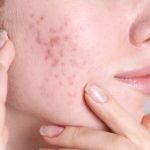
- Persistent redness across the cheeks, nose, chin, or forehead
- Visible small blood vessels, often on the cheeks and nose
- Bumps and pimples that look like acne but don’t respond to acne products
- Burning, stinging, or tightness, especially after applying products
- Dry, rough patches that flake easily
- Gritty, irritated eyes (called ocular rosacea)
On deeper skin tones, rosacea can look purplish, brownish, or dusky rather than bright red, which means it often goes unnoticed for longer. If you have warmth, stinging, and bumps without obvious redness, it’s still worth asking a dermatologist.
What Triggers Rosacea Flare-Ups?
Rosacea tends to cycle between calm stretches and flare-ups, and flares are frequent for many people. In a 2025 National Rosacea Society survey on flare-ups, about a third of respondents said they flare every few days, and another 15.5% flare at least once a week.
Triggers vary from person to person, but some show up again and again. Here’s what patients reported in a large rosacea trigger survey:
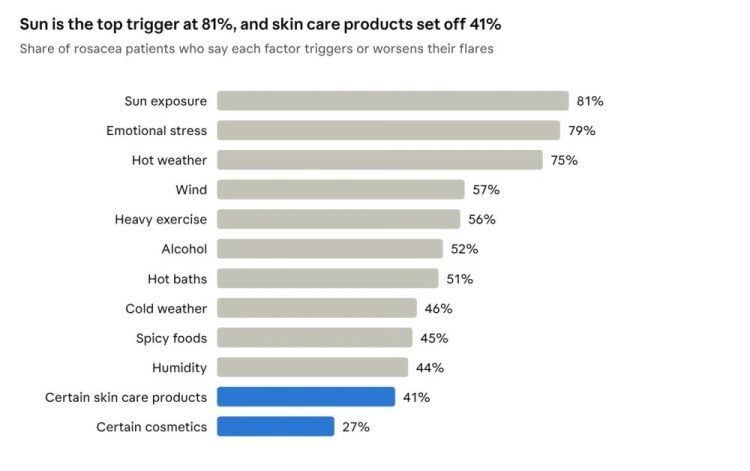
Notice the blue bars at the bottom. Skin care products and cosmetics trip up a big share of people with rosacea, which is great news in a way: your routine is one trigger you have full control over. The weather and your stress levels? Harder to manage. Your bathroom shelf? Totally in your hands.
The easiest way to find your own triggers is a simple flare diary, which the American Academy of Dermatology suggests in its rosacea trigger tips. More on that below.
The Rosacea Skincare Routine, Step by Step
When your skin is this sensitive, less really is more. Dermatologists consistently recommend a short routine built on three moves: cleanse gently, moisturize, and protect from the sun.
Your Morning Routine
- Cleanse gently. Use a mild, fragrance-free cleanser and lukewarm water. Apply it with your fingertips, rinse, and pat dry with a soft towel.
- Apply your treatment. If your dermatologist prescribed a topical, use it now (or follow the timing they gave you).
- Moisturize. A fragrance-free cream with ceramides, glycerin, or niacinamide helps rebuild your barrier.
- Finish with mineral sunscreen. Go for broad-spectrum SPF 30 or higher, every single day.
Your Evening Routine
- Cleanse again. Remove sunscreen, makeup, and the day’s buildup with the same gentle cleanser.
- Apply your treatment. Evening is often when prescription creams or gels go on.
- Moisturize. A slightly richer cream works well overnight, especially in cold or dry weather.
That’s it. Seven steps across a whole day, and none of them involve scrubbing.
Cleansing Tips That Make a Real Difference
Many people with rosacea under-wash because cleansing stings. Skipping it lets oil and grime sit on the skin, which can make irritation worse. The fix is a gentler technique:
- Stick to lukewarm water. Hot water is a common flare trigger.
- Skip washcloths, sponges, and cleansing brushes.
- Pick a soap-free, fragrance-free cleanser.
- Pat, don’t rub, when drying off.
- Let your face air-dry for a minute before applying a prescription product, unless your dermatologist says otherwise.
Moisturizing Every Day
A good moisturizer locks in water and gives your barrier a fighting chance against wind, heat, and cold. Look for short ingredient lists and words like “fragrance-free” and “for sensitive skin.” Creams usually suit dry rosacea skin better than gels, while lightweight lotions work for oilier types.
Sunscreen is Your Daily Non-Negotiable
Sun exposure is the most commonly reported rosacea trigger, so daily sunscreen does a lot of heavy lifting. The American Academy of Dermatology recommends broad-spectrum, water-resistant sunscreen with SPF 30 or higher, applied to all skin your clothes don’t cover, even on cloudy days.
If regular sunscreen stings, switch to a mineral formula. Here’s how the two types compare for rosacea-prone skin:
| Mineral sunscreen | Chemical sunscreen | |
|---|---|---|
| Active ingredients | Zinc oxide, titanium dioxide | Avobenzone, octocrylene, homosalate, and others |
| How it works | Sits on top of skin and reflects UV light | Absorbs into skin and converts UV to heat |
| Sting factor | Low, well tolerated by sensitive skin | Higher chance of burning or stinging |
| White cast | Possible; choose tinted or micronized | Usually none |
| Best for rosacea? | Usually the first pick | Fine if your skin tolerates it |
Worried about a white cast? Tinted or micronized mineral sunscreens blend in much better, especially on medium and deep skin tones. A wide-brimmed hat and shade between 10 a.m. and 4 p.m. add extra backup.
Rosacea-Friendly Ingredients vs. Ingredients to Skip
Reading labels is half the battle with rosacea. Some ingredients calm and protect, while others reliably cause stinging and redness.
Ingredients Worth Looking For
| Ingredient | Why it helps rosacea skin |
|---|---|
| Azelaic acid | Calms inflammation and bumps; available over the counter and in prescription strength |
| Niacinamide | Supports the skin barrier and helps reduce visible redness |
| Ceramides | Rebuild the barrier and lock in moisture |
| Glycerin and hyaluronic acid | Pull water into the skin without irritation |
| Zinc oxide and titanium dioxide | Gentle mineral sun protection |
| Centella asiatica | Soothing plant extract that helps settle irritated skin |
| Allantoin, bisabolol, aloe | Comforting ingredients for tender, reactive skin |
| Squalane | Lightweight oil that softens without clogging pores |
Ingredients to Avoid
The AAD’s list of ingredients that commonly irritate rosacea includes alcohol, camphor, fragrance, glycolic acid, lactic acid, menthol, sodium lauryl sulfate, and urea. Other common troublemakers:
- Physical scrubs and gritty exfoliants, which create tiny tears in already fragile skin
- Salicylic acid and benzoyl peroxide, two acne staples that often sting rosacea skin
- Witch hazel and alcohol-heavy toners, which strip moisture
- Peppermint, eucalyptus, and other essential oils, which can feel cooling but tend to irritate
- Retinoids at full strength, which can work for some people once rosacea is under control, but only when introduced slowly and with a dermatologist’s input
A handy rule: the shorter the ingredient list, the fewer chances something on it will set you off.
How to Patch Test New Products
Since skincare products and cosmetics rank among the top triggers, testing before you commit saves you a lot of grief. Here’s a simple method dermatologists suggest:
- Pick a small, discreet spot close to your face, such as along the jawline or just in front of the ear.
- Apply a small amount of the product twice a day.
- Repeat for 7 to 10 days, since some reactions take a while to appear.
- Watch for redness, burning, itching, or bumps. If any show up, the product isn’t for you.
Only introduce one new product at a time. If you add three at once and flare, you’ll have no idea which one caused it.
Makeup Tips for Rosacea-Prone Skin
You don’t have to give up makeup. You just need to choose it carefully:
- Use a green-tinted primer or color corrector. Green sits opposite red on the color wheel, so a thin layer neutralizes redness before foundation.
- Choose mineral or powder formulas. Dermatologists often recommend powder or water-based makeup because it’s less likely to irritate.
- Go fragrance-free. Scent is one of the most common culprits in cosmetics.
- Keep it light. Fewer layers means fewer ingredients touching your skin.
- Wash brushes weekly. Dirty tools can harbor bacteria and old product.
- Remove makeup gently with your regular cleanser or a fragrance-free micellar water.
Daily Habits That Help Your Skincare Work Better
Skincare works best when you also dodge your personal triggers. A few easy swaps:
- Keep a flare diary. Jot down what you ate, drank, did, and used on your skin, plus when flushing hit. Patterns show up within a few weeks.
- Let hot drinks cool to warm before sipping.
- Cover up in wind and cold with a scarf over your lower face.
- Exercise in cooler conditions, keep sessions moderate, and have a cold water bottle handy.
- Find a stress outlet you’ll actually use. In one National Rosacea Society survey on stress, more than two thirds of respondents said managing stress helped reduce their flare-ups.
- Take shorter, cooler showers and baths.
When to See a Dermatologist
A solid routine goes a long way, but it works best alongside medical treatment. Book an appointment if:
- Your redness or bumps keep getting worse despite a gentle routine
- Your eyes feel gritty, dry, burn, or look bloodshot
- The skin on your nose or cheeks is thickening
- Over-the-counter products sting no matter what you try
- You’re not sure it’s rosacea in the first place (acne, eczema, and lupus can look similar)
A dermatologist can offer prescription options such as topical azelaic acid, metronidazole, or ivermectin, oral antibiotics like low-dose doxycycline, and laser or light therapies that fade visible blood vessels. Combining treatment with a rosacea-friendly routine usually gives the best results.
Rosacea Skincare FAQs
The best routine is a short one: a gentle, fragrance-free cleanser, a barrier-supporting moisturizer, and a mineral sunscreen with SPF 30 or higher every morning. Add any prescription treatment your dermatologist recommends, and introduce new products one at a time.
Twice a day, morning and night, using lukewarm water and your fingertips. Washing too little lets irritants build up, and washing too often or too roughly strips the skin.
Sometimes. Retinoids can irritate rosacea, especially during a flare. If your skin is calm and your dermatologist approves, start with a low strength two or three nights a week, apply it over moisturizer, and back off if stinging or redness appears.
It can be, but strong L-ascorbic acid serums often sting. Gentler forms such as sodium ascorbyl phosphate or tetrahexyldecyl ascorbate tend to be easier on sensitive skin. Patch test first.
Skip scrubs and strong acids like glycolic acid. If you want mild exfoliation, azelaic acid or a low-strength polyhydroxy acid (PHA) is a gentler option, used no more than a couple of times a week.
Yes. In winter, use a richer moisturizer and protect your face from wind. In summer, focus on sunscreen, shade, and staying cool. Many people find a lighter moisturizer feels better in heat and humidity.
Rosacea is chronic, so it tends to come and go rather than disappear for good. With treatment, trigger awareness, and a gentle routine, many people keep it well controlled for long stretches.
For some people, yes. Spicy foods, alcohol, and hot drinks are the most commonly reported food triggers. A flare diary is the easiest way to figure out what affects you personally.