Hey Beautiful! This site is reader-supported and we earn commissions if you purchase products from retailers after clicking on a link from our site.
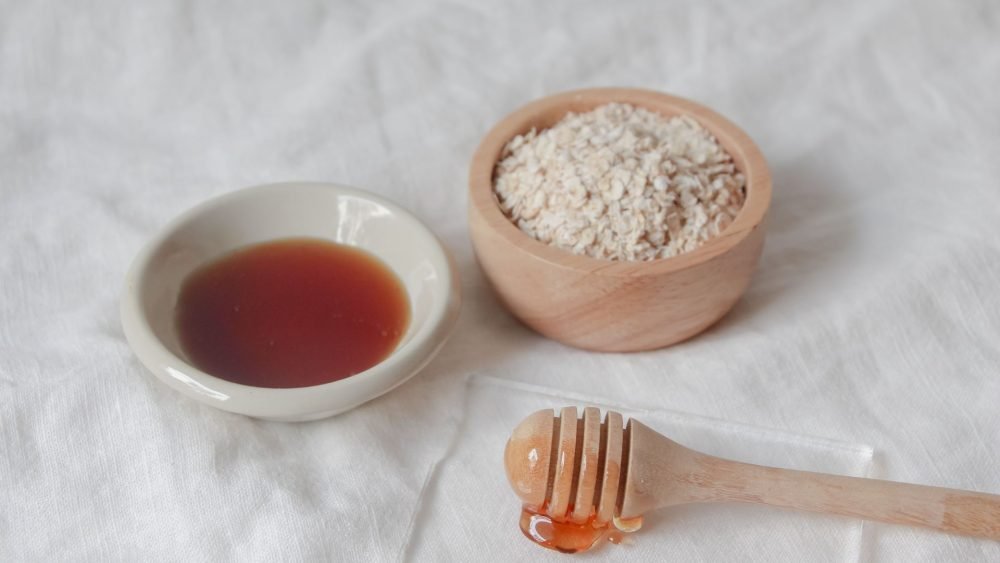
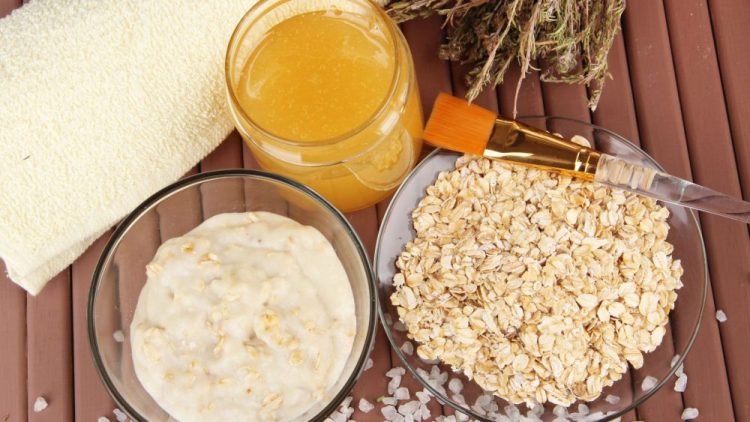
Skincare trends come and go, but the honey and oatmeal face mask has stuck around for a reason. Long after clay masks, charcoal peels, and a dozen viral serums have faded, this two-ingredient combo keeps showing up in bathroom cabinets and skincare forums. It’s cheap, it’s simple, and it doesn’t ask much of your skin or your wallet.
Why the Honey Oatmeal Mask Has Stayed Popular
A few reasons explain the staying power of oatmeal and honey masks:
- Soothing on contact. Oats have a calming effect on irritated or reactive skin, which is why they show up in eczema creams and baby lotions too
- Budget-friendly. Most already have both ingredients in their kitchens
- Low risk for sensitive skin. Dermatologists generally regard both oats and honey as gentle for most skin types, with a lower likelihood of triggering irritation compared to many active ingredients.
- No fancy equipment or steps. You mix, apply, rinse. That’s it.
A note on oats: Every recipe below calls for colloidal oats, which are oats ground into a fine powder, not the flakes you’d cook for breakfast. You can buy colloidal oatmeal at most drugstores, or make your own by grinding plain rolled oats in a coffee grinder or blender until they reach a flour-like texture.
3 Honey and Oatmeal Mask Recipes
There isn’t just one way to make this mask.
Here are three versions, each addressing a different skin concern. Pick the one that matches what your skin needs right now.
1. The Classic Calming Mask (for sensitive or irritated skin)
This is the original, no-frills version, and the one most people start with.
| Ingredient | Amount |
|---|---|
| Colloidal oats | 1 tbsp |
| Raw honey | 1 tsp |
| Water | 1 to 2 tsp |
How to make it:
- Mix the oats and honey in a small bowl.
- Add water a little at a time, stirring until you get a spreadable paste.
- Apply to clean, dry skin, avoiding the eyes and lips.
- Leave on for 10 to 15 minutes.
- Rinse with lukewarm water, using gentle circular motions to help the oats lightly buff away.
- Pat dry and follow with moisturizer.
Best for skin that’s reactive, flaky, or recovering from irritation like sunburn or a mild eczema flare.
2. The Brightening Mask (for dullness and uneven texture)
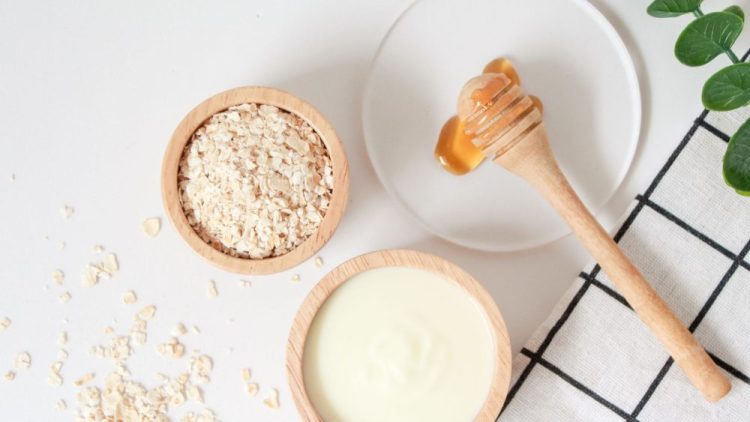
Swapping water for plain yogurt adds gentle lactic acid, helping with mild exfoliation and giving a brighter look over time.
| Ingredient | Amount |
|---|---|
| Colloidal oats | 1 tbsp |
| Raw honey | 1 tsp |
| Plain yogurt | 1 tbsp |
How to make it:
- Combine all three ingredients in a bowl and stir until smooth.
- Apply an even layer to clean skin.
- Leave on for 10 to 15 minutes.
- Rinse with lukewarm water, massaging gently as you go.
- Follow with moisturizer.
Best for skin that looks tired but isn’t currently irritated.
Patch test first if you have reactive skin, since yogurt is a mild acid.
3. The Moisture-Boost Mask (for dry or dehydrated skin)
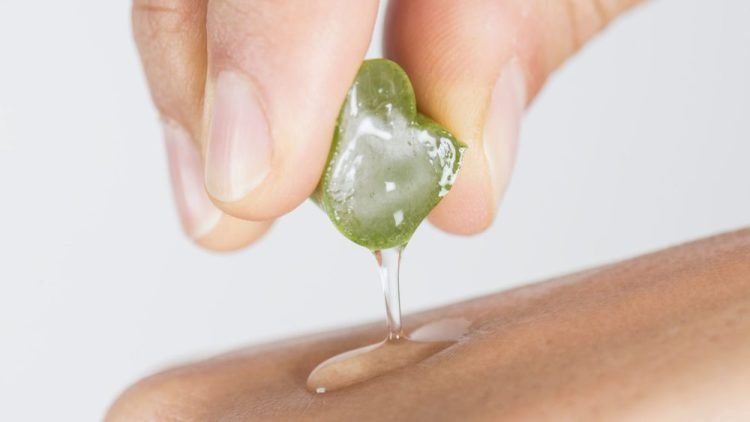
Adding mashed banana or a few drops of aloe vera gel increases the moisture without adding anything harsh.
| Ingredient | Amount |
|---|---|
| Colloidal oats | 1 tbsp |
| Raw honey | 1 tsp |
| Mashed ripe banana (or aloe vera gel) | 1 tbsp |
| Water | as needed to loosen the mix |
How to make it:
- Mash the banana until smooth, or measure out the aloe vera gel.
- Mix with the oats and honey in a bowl.
- Add a small splash of water if the mixture is too thick to spread.
- Apply to clean skin and leave on for 10 to 15 minutes.
- Rinse with lukewarm water.
- Follow with moisturizer while skin is still slightly damp to lock in hydration.
Best for skin that feels tight, dry, or dehydrated, especially in colder months or after sun exposure.
Which Honey Oatmeal Mask Should You Use?
| Your skin feels like… | Best recipe |
|---|---|
| Irritated, red, or reactive | Classic Calming Mask |
| Dull, uneven, or lacking glow | Brightening Mask |
| Dry, tight, or dehydrated | Moisture-Boost Mask |
You can rotate between all three depending on how your skin feels week to week.
None of them require special tools, and all three keep the same base ratio of oats to honey, so you’re never starting from scratch.
Who This Mask Works Well For
| Skin concern | How the mask helps |
|---|---|
| Dry or flaky skin | Honey pulls in moisture; oats soften rough texture |
| Sensitive or reactive skin | Both ingredients are low-irritant and fragrance-free by default |
| Redness or mild irritation | Oats have a calming effect on the skin barrier |
| Occasional dullness | Yogurt version adds light exfoliation for a brighter look |
| Acne-prone skin | Honey has natural antibacterial properties, though it won’t replace targeted acne treatment |
If you have very oily or acne-prone skin, this mask can still be part of your routine, but don’t expect it to control breakouts on its own. Think of it as a soothing add-on rather than a treatment.
Tips for Great Face Masks
- Patch test first, especially if you have a pollen or grain allergy, since oats and honey are both plant and bee-derived products.
- Use raw or minimally processed honey if you can. Highly refined honey has fewer of the beneficial compounds found in raw versions.
- Don’t leave it on too long. More time doesn’t mean better results here. Honey can dry into a slightly sticky film after 15 to 20 minutes, which makes rinsing harder without adding any extra benefit.
- Apply to slightly damp skin if you find the paste too thick to spread evenly.
- Store leftovers in the fridge for up to two days in a sealed container, since this mask has no preservatives.
How Often to Use
Two to three times a week is a reasonable starting point for most skin types.
If your skin is very sensitive or you’re using it during a flare-up, once or twice a week is enough. There’s no need to use it daily, since your skin doesn’t need constant reapplication to see the calming effect.
A Few Precautions
- If you have a known allergy to oats or bee products, skip this mask entirely.
- Honey can feel very sticky, so keep hair pulled back and have a towel nearby.
- This mask is not a substitute for treating diagnosed skin conditions like eczema or rosacea. It can be a soothing addition to a routine, but check with a dermatologist for anything persistent or worsening.
FAQs
Yes, as long as you grind them into a fine powder first. Whole or steel-cut oats are too coarse and won’t blend into a smooth paste.
Raw, unfiltered honey tends to retain more of its natural enzymes and antioxidants compared to heavily processed honey, though both will still work for a basic mask.
Some people add a few drops of aloe vera gel for extra soothing, or a small amount of mashed banana for added moisture. Keep additions simple so you don’t dilute the mask’s gentle nature or introduce new irritants.
It can help calm redness and inflammation around breakouts, but it won’t clear active acne. Pair it with a proper acne routine if that’s your main concern.
Why This Combo Earns Its Spot in Your Routine
The honey and oatmeal mask has held its place in skincare routines for a long time because it does a small job well: it calms skin without much cost or risk.
It won’t replace a full skincare routine, but as a weekly reset for dry, sensitive, or slightly irritated skin, it’s hard to beat for how little effort it takes.